
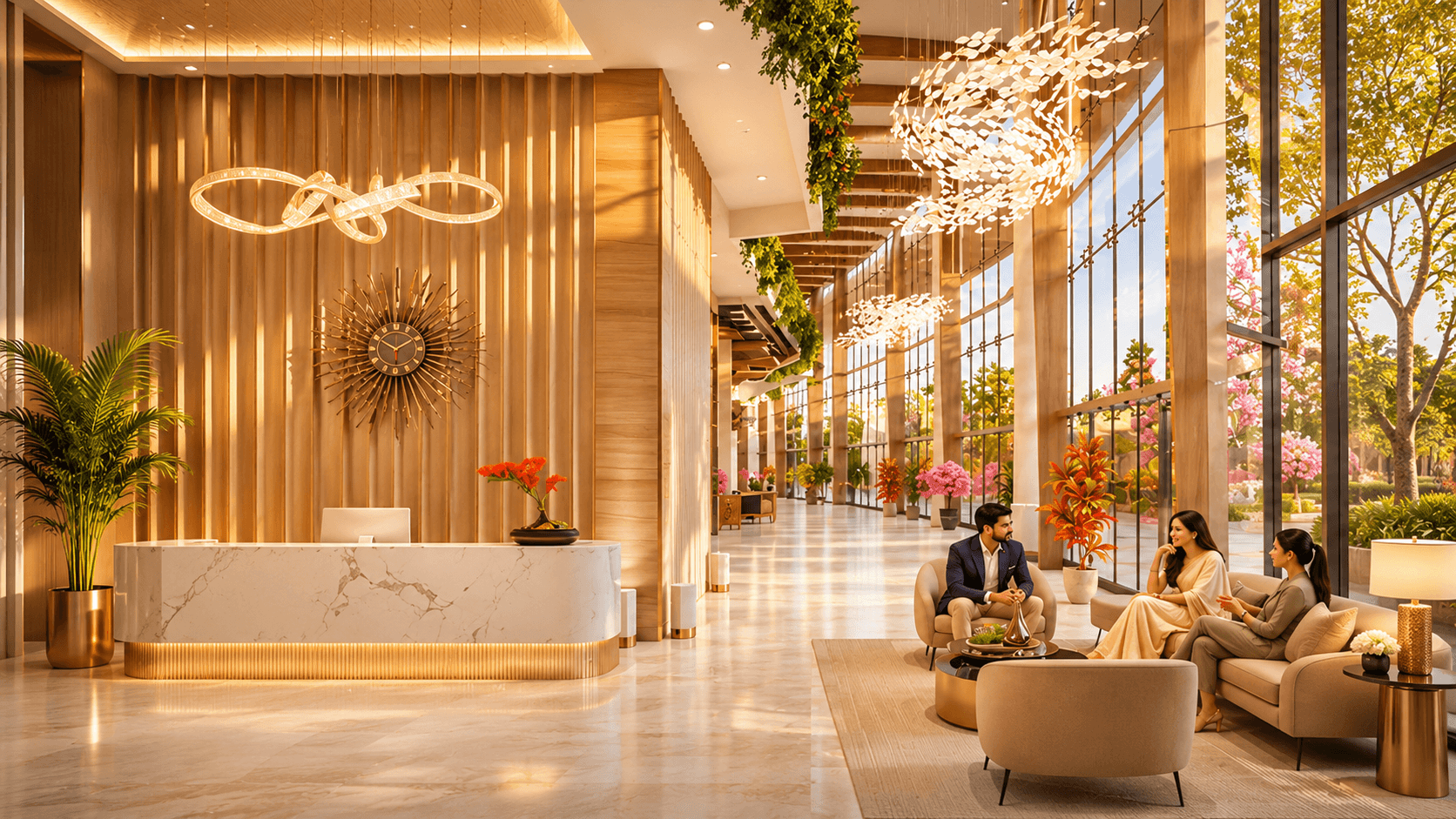
A home is felt long before it is furnished. The way daylight settles in a room, how spaces flow into one another, the quiet of a bedroom and the view from a balcony all shape how a residence lives, well before any interior detail comes into focus.
For discerning buyers in the premium market, these qualities deserve as much scrutiny as location, specifications and amenities. In Delhi NCR’s luxury residential landscape, where homes are expected to deliver comfort as well as prestige, architecture is what separates an impressive address from a home that feels right.
How Architecture Influences the Experience of a Home
Good residential architecture balances function, aesthetics and human experience. It is judged in everyday moments: a well-proportioned living room, a bedroom undisturbed by household activity, a window that frames green surroundings.
1. Spatial Planning: The Logic of Comfort
A larger apartment is not necessarily a better one. If the layout hampers movement or compromises privacy, additional area adds little.
Thoughtful planning separates social spaces from private ones, so that living and dining areas host family and guests while bedrooms remain a retreat. Clear circulation, sensible room connections and well-placed storage let residents move through the home without obstruction. This matters most in expansive residences designed for families with different routines. At Swaranaya, generous layouts and wraparound balconies show how planning can extend a home beyond its internal floor area.
2. Natural Light and Ventilation: The Rhythm of the Day
Light gives a home its changing character. It adds depth to interiors, brings out architectural detail and keeps residents connected to the world outside.
How well daylight and fresh air reach each room depends on orientation, window placement, room proportions and balcony design. The National Building Code of India recognises both lighting and natural ventilation as essential design considerations, which is why they belong in the plan from the outset. In premium homes, expansive glazing can heighten the sense of openness, but in Delhi NCR’s climate it must be balanced against heat gain, glare and privacy.
3. Privacy: The Measure of a Luxury Home
True luxury is the freedom to use a home independently. Privacy allows family members to follow their own routines and lets hosts entertain without intruding on personal space.
It is established through zoning, room placement and entrance design. Bedrooms set apart from entertaining areas stay quiet without feeling disconnected, and a well-defined entrance sequence keeps guests from passing through private zones. For buyers considering luxury apartments in South Delhi, these details reveal more than square footage ever can.
4. Proportion and Ceiling Height: The Perception of Space
Floor area describes how much space a home has, but proportion determines how that space feels. Ceiling height, room dimensions and window scale all influence whether an interior feels expansive or constrained.
Double-height volumes add drama and architectural character, while well-proportioned living areas accommodate furniture and movement with ease. Grandeur, however, must earn its place. Scale without purposeful planning can leave a room feeling cavernous rather than comfortable. The aim is a balance of openness and usability.
5. Materials: The Language of Character
Stone, timber, glass and metal each bring their own texture, warmth and durability. The right choice depends on design intent, climate and maintenance demands.
In premium residences, character comes from consistency. A restrained palette of finishes tends to age better than decorative excess, and the quality of execution, especially where materials meet, shows how a home will perform over years of daily use.
6. Indoor-Outdoor Connections: Extending the Home
Balconies, terraces, courtyards and carefully placed windows bring in daylight, changing views and a place to pause outdoors. In dense urban settings, they extend the home without sacrificing privacy.
Wraparound balconies, for instance, link interiors to the skyline and surroundings, while landscaped greens offer a calmer setting within a larger development. For those exploring sky villas in South Delhi, the integration of terraces, views and expansive layouts is a vital measure of architectural quality.
Beyond the Individual Home: The Role of Community Design
A residence is shaped as much by what surrounds it as by what lies within. Building placement, landscaping, shared facilities and pedestrian movement determine how comfortably residents experience the wider development. The best communities treat these as parts of one master plan rather than a collection of amenities.
- Site Planning: Building placement, open spaces and circulation routes should create an organised, accessible environment.
- Landscaped Open Spaces: Gardens and green areas bring nature into the built environment and invite outdoor recreation.
- Shared Facilities: Clubhouses, wellness areas and recreational spaces should complement residents’ lifestyles and remain easy to reach.
- Movement and Accessibility: Clear entrances, pedestrian routes and common areas make the development easy to navigate.
- Interaction and Privacy: Community spaces should encourage social connection without intruding on individual homes.
Landscaped greens, considered entrance lobbies and extensive clubhouse facilities work best when they become a natural part of residents’ daily routines.
What Should Homebuyers Look for in a Well-Designed Luxury Residence?
Architectural quality should be judged beyond elevations, brochures and decorative finishes. These are the elements to examine:
| Architectural Element | What to Evaluate |
|---|---|
| Spatial Planning | Functional layouts and clearly defined living zones |
| Natural Lighting | Window placement, daylight and solar exposure |
| Ventilation | Appropriate openings and air circulation |
| Privacy | Bedroom positioning and entrance arrangements |
| Proportions | Room dimensions, ceiling heights and usable space |
| Outdoor Connections | Balconies, views and landscaped surroundings |
| Material Quality | Durability, finishes and detailing |
| Community Planning | Landscapes, shared facilities and circulation |
Ask to see actual floor plans, site layouts and construction specifications rather than relying on artistic impressions alone. For a luxury real estate developer in Delhi NCR, architectural responsibility goes beyond creating striking buildings. It means bringing planning, functionality, materials and surroundings together to meet the expectations of discerning homebuyers.
Conclusion: Architecture is About How a Home Makes You Feel
The quality of residential architecture reveals itself in daily life: the comfort of a well-planned living area, the privacy of personal spaces, the presence of natural light and the relationship between a home and its surroundings. For premium homebuyers, these deserve careful attention alongside location, specifications and amenities.
Good architecture rarely demands attention. It works quietly in the background, making spaces more functional, comfortable and meaningful. That is what turns a beautifully built residence into a home.